
CV & Interview Toolkit

Build a Strong Foundation for Your UAE Career

A professional CV and strong interview skills can significantly improve your chances of getting hired in Dubai and across the UAE. This toolkit provides free resources, practical guides, and interview preparation materials to help you present yourself confidently and professionally.

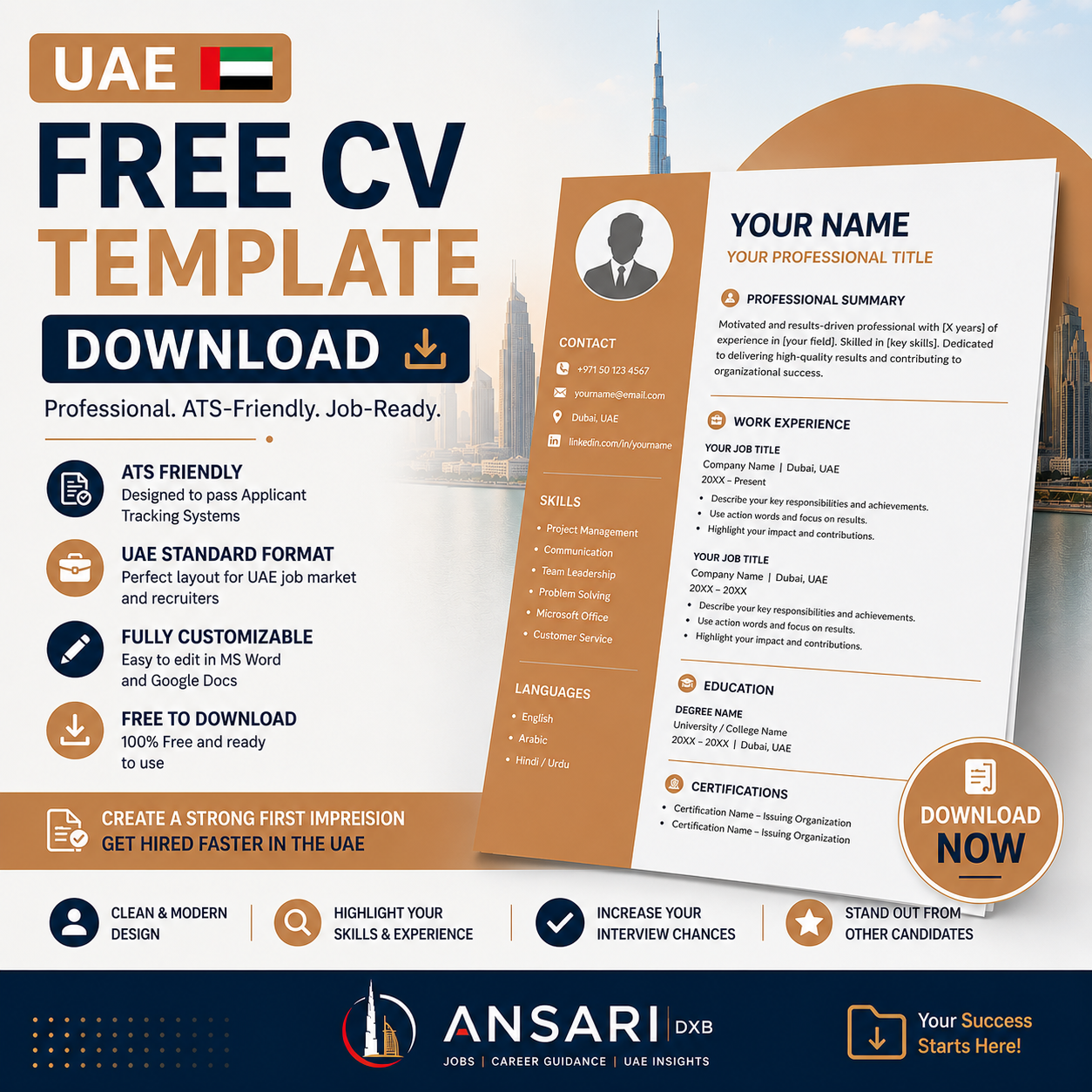
Free UAE CV Template

Download a professionally structured CV template designed for UAE employers. The template is clean, easy to edit, and suitable for fresh graduates as well as experienced professionals.

✔ Professional Layout
✔ ATS-Friendly Structure
✔ Easy to Edit in Microsoft Word
✔ Suitable for UAE Employers

  • 📥 Download Free CV Template
  • 💬 Need Help? Contact on WhatsApp

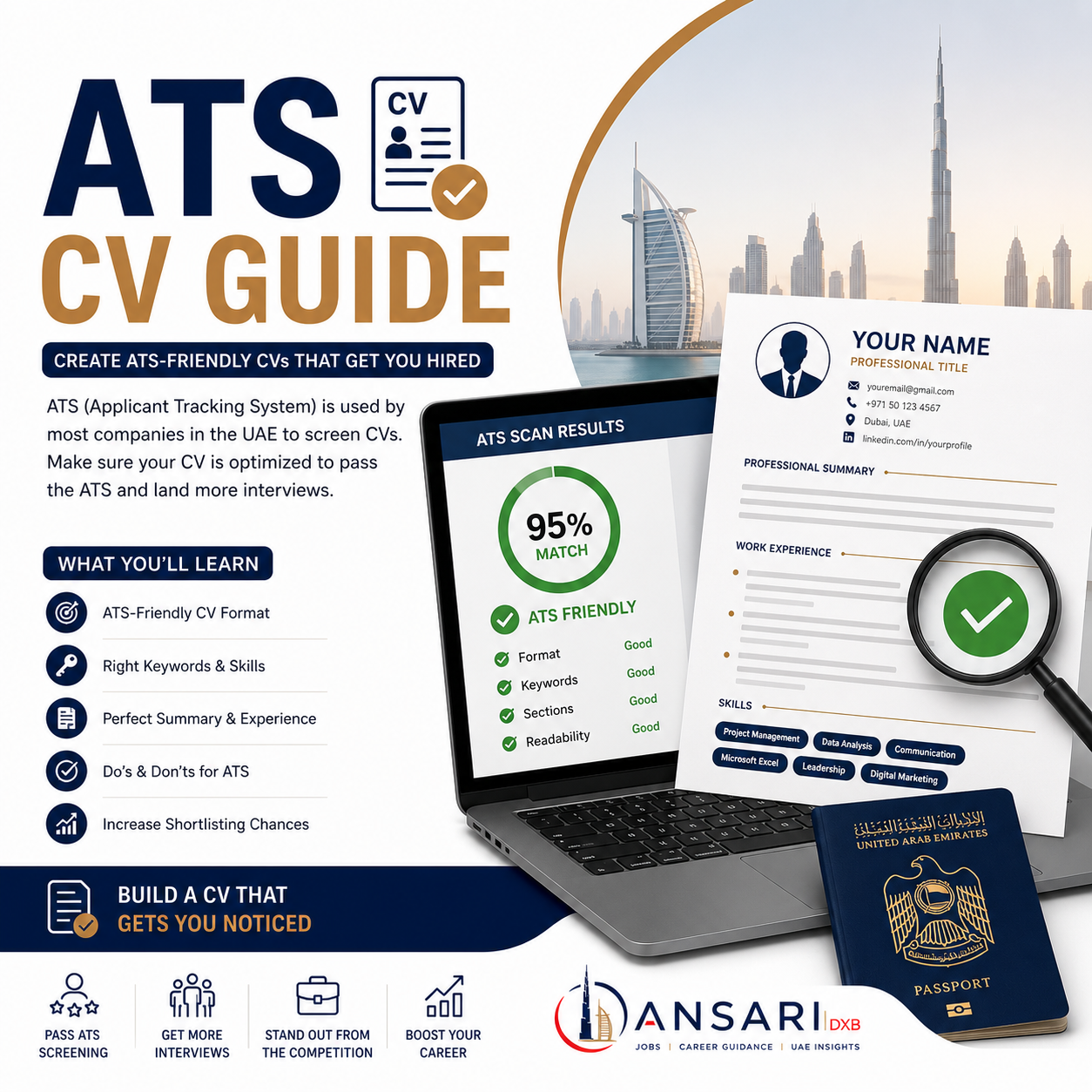
ATS CV Guide

Create an ATS-Friendly CV That Gets Noticed

Many companies in the UAE use Applicant Tracking Systems (ATS) to screen job applications before a recruiter reviews them. If your CV is not ATS-friendly, it may be rejected automatically—even if you’re qualified for the role.

This guide explains how to create a CV that is easy for ATS software to read while remaining professional for recruiters.

What You’ll Learn

Our ATS CV Guide covers:

  • What an Applicant Tracking System (ATS) is
  • Why employers use ATS
  • How ATS scans and ranks CVs
  • Choosing the right CV format
  • Using relevant job keywords
  • Writing an effective professional summary
  • Presenting your work experience clearly
  • Highlighting skills that recruiters search for
  • Formatting tips that improve readability
  • Common ATS mistakes to avoid
  • 📥 Download ATS CV Guide

    💬 Need a Professional ATS CV? Contact Us on WhatsApp

Cover Letter

Make a Strong First Impression

A cover letter is a short document sent along with your CV that introduces you to the employer. It highlights your skills, experience, and interest in the position, giving recruiters a quick overview of why you’re a suitable candidate.

While not every employer requires a cover letter, submitting a well-written one can demonstrate professionalism and genuine interest in the role.

Why Is a Cover Letter Important?

A professional cover letter can help you:

  • Introduce yourself professionally.
  • Explain why you’re interested in the position.
  • Highlight your most relevant skills and experience.
  • Show your enthusiasm for joining the company.
  • Create a positive first impression before your CV is reviewed.

    Final Tip

    A cover letter doesn’t replace your CV—it complements it. A concise, personalized cover letter can help employers understand your motivation, professionalism, and suitability for the role, increasing your chances of making a positive first impression.

Resume Mistakes

Avoid Common Resume Mistakes That Can Cost You an Interview

Common Resume Mistakes

1. Generic Resume
Customize your resume for each job instead of using the same one everywhere.

2. Poor Formatting
Use a clean, professional layout with clear headings and consistent fonts.

3. Spelling Errors
Proofread carefully to eliminate grammar and spelling mistakes.

4. Weak Summary
Write a short, impactful summary that highlights your key strengths.

5. Missing Keywords
Include relevant keywords from the job description to improve ATS compatibility.

6. Too Much Information
Keep only relevant experience and avoid unnecessary personal details.

7. Incorrect Contact Details
Make sure your phone number and email address are accurate and up to date.

Interview Preparation Tips

Prepare with Confidence, A successful interview is about more than your qualifications. Good preparation helps you communicate clearly, make a positive impression, and demonstrate your suitability for the role.

Interview Preparation Tips

1. Research the Company
Know the company and the role you’re applying for.

2. Review the Job Description
Understand the key responsibilities and requirements.

3. Practice Your Answers
Prepare for common interview questions.

4. Dress Professionally
Wear clean and appropriate business attire.

5. Be Punctual
Arrive 10–15 minutes early.

6. Speak Clearly
Answer confidently and stay honest.

7. Show Positive Body Language
Maintain eye contact and smile naturally.

8. Carry Required Documents
Bring your CV and any requested certificates.

9. Ask Relevant Questions
Show interest by asking about the role or company.

10. End Professionally
Thank the interviewer for their time.

Common Interview Questions

Preparing answers to common interview questions can help you feel more confident and communicate your experience effectively.

Common Interview Questions

1. Tell me about yourself.
Give a brief introduction about your background.

2. Why do you want this job?
Explain why you’re interested in the role.

3. Why should we hire you?
Highlight your key strengths and value.

4. What are your strengths?
Share your most relevant skills.

5. What is your weakness?
Mention one and explain how you’re improving it.

6. Why did you leave your last job?
Answer honestly and stay positive.

7. What are your salary expectations?
Provide a realistic salary range.

8. How do you handle pressure?
Describe how you stay calm and focused.

9. Where do you see yourself in 5 years?
Share your career goals.

10. Do you have any questions?
Ask about the role or company.

Related Projects